
Indian telecom gear maker Signaltron and semiconductor firm Signalchip have partnered with Indonesia's sovereign research body PRT BRIN to develop and deploy advanced telecom technologies, including 4G, 5G, and future 6G, specifically tailored for Indonesia's unique archipelagic geography to connect underserved regions.

HCLTech, India's third-largest IT services company, reported robust Q2 revenue growth of 2.3 per cent in constant currency, driven by services and ER&D segments, with strong new deal wins of $3.3 billion and significant traction in its AI business. Despite exceeding margin estimates and raising revenue guidance, some brokerages remain cautious due to the stock's premium valuation compared to peers.
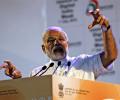
Prime Minister Narendra Modi, at the India Mobile Congress (IMC) 2026, articulated a vision for India's communications sector, emphasizing a global framework to combat cyber frauds and deepfakes. He called for India to become a hub for innovation and product development for the world. Industry leaders lauded his vision, highlighting India's robust digital infrastructure and its journey towards becoming a global technology leader, with a focus on trust, security, and responsible innovation.

'... but runs with the rigour and discipline of a large enterprise.'

Investors are set to monitor quarterly earnings, crude oil prices, the Jio Platforms initial public offering, and foreign investor activity in the upcoming holiday-shortened week, according to market analysts.

Prime Minister Narendra Modi has urged for a global framework to combat cross-border cyber frauds and deepfakes, highlighting the need for governments, tech companies, telecom operators, and financial institutions to collaborate. Speaking at the India Mobile Congress 2026, Modi stressed that technology thrives on trust and that India is ready to share its expertise in tackling cyber threats. He also noted the rapid expansion of 5G and the success of digital governance initiatives like Direct Benefit Transfer.

Airtel Business CEO Sharat Sinha stated that evolving architecture and methodologies for safely deploying Artificial Intelligence, coupled with adequate guardrails, are essential to unlock productivity gains. He welcomed the government's upcoming consultation paper on AI regulation, focusing on safety, deepfakes, and a human-first approach. Sinha also highlighted AI's role in driving demand for digital infrastructure and Airtel's growth in cybersecurity and fraud prevention.

Indian benchmark stock indices, Sensex and Nifty, rallied significantly, with Sensex jumping over 1,500 points and Nifty reaching a nearly three-week high, driven by strong buying in banking, IT, and Reliance Industries stocks, alongside easing crude oil prices.

Digital services major Jio Platforms is anticipated to list on the stock exchange by the end of October, with an estimated enterprise valuation of USD 143-146 billion, making it India's largest public offer at around USD 3.8 billion.

Union Minister Ashwini Vaishnaw warned of increased global turbulence from tech disruptions, AI, and financial risks in the coming years. He stated that India is strengthening its economic and technological resilience to protect its growth from external shocks. India is focusing on domestic manufacturing and design in critical tech areas while maintaining global integration, with trust becoming as crucial as cost in supply chains.
BRICS leaders, in their New Delhi Declaration 2026, have called for wider access to Artificial Intelligence resources and stronger international cooperation to ensure the technology is safe, secure, inclusive, and reliable. The declaration outlines a broad technology agenda covering AI, cybersecurity, digital public infrastructure, telecom, quantum technologies, and advanced manufacturing, committing to implement the grouping's statement on 'Global Governance of Artificial Intelligence'.

India is making a significant push to establish itself as a global semiconductor manufacturing hub, driven by strategic investments and policy support. The upcoming SEMICON India 2026 event will showcase the country's advancements and ambitions in this critical industry, which underpins virtually all modern electronic devices and has faced global supply chain vulnerabilities.

Indian stock markets saw a significant rebound, with the Sensex jumping nearly 790 points, primarily fuelled by strong buying interest in telecom, pharma, and private banking shares, despite a volatile trading session and a weakening rupee.

Digital money is gradually starting to behave like software. It's no longer inert -- sitting passively in accounts. In the not-so-distant future, your money could become 'smart' and 'active,' understanding your preferences, paying your bills automatically, optimising your returns, and managing your risks -- all without you having to manage the details.

The Delhi government is set to introduce a comprehensive drone policy aimed at creating over 1,000 jobs and regulating drone operations. The policy will focus on establishing research clusters, flight testing facilities, and providing subsidies, while also addressing drone usage for government purposes like traffic management and surveillance, considering the city's extensive 'no drone zones'.

Bharti Airtel's first-quarter (April-June/Q1) performance for 2026-27 (FY27) surpassed estimates across most metrics, fuelled by robust growth in both its India and Africa operations, with significant increases in average revenue per user (Arpu) and subscriber additions.

Brokerages are forecasting a strong first quarter (April-June/Q1) for Reliance Industries Ltd (RIL) in FY2026-27, with double-digit revenue growth, Ebitda increases of around 12 per cent, and net profit rising up to 10 per cent, primarily driven by its oil-to-chemicals (O2C), retail, and Jio businesses.

Reliance Industries (RIL) delivered a better-than-expected operational performance in Q1FY27, driven by a recovery in its oil-to-chemicals (O2C) business and robust gains in the telecom (Jio) segment, though its retail arm missed estimates. Analysts highlight the upcoming Jio Platforms IPO and execution in new energy and consumer businesses as key triggers for the stock's future growth.

High memory costs have driven average mobile phone prices up by 15 per cent.

In the next 36 months nearly 25 to 40 per cent of jobs will be under threat from AI and job losses are inevitable.

'Healthy double-digit returns are still possible, though a sharp rally is unlikely.'

Indian stock markets this week will be primarily influenced by a series of corporate Q1 earnings, the evolving geopolitical situation in West Asia, and fluctuations in crude oil prices, according to market analysts.

Indian benchmark indices Sensex and Nifty closed flat, paring early gains due to renewed hostilities between the US and Iran, which unsettled investor sentiment and led to profit booking in metal, oil & gas, and telecom shares.
Bharti Airtel added 7.64 trillion in value over the past five years, making it the biggest wealth creator in India's private sector, while the IT sector, including TCS, Infosys, and Wipro, collectively lost 8.5 trillion in value, according to the latest Burgundy Private Hurun India 500 report.
Reliance Industries Limited (RIL) faced a challenging fourth quarter, with its energy business experiencing significant headwinds, leading to overall muted results and prompting analysts to adjust their outlook, even as consumer segments like Jio and retail demonstrated robust growth.

Indian equity benchmarks Sensex and Nifty surged nearly 1 per cent, driven by strong earnings reports from FMCG and auto sectors, alongside a rally in Asian markets and signs of de-escalation in geopolitical tensions.

The Delhi government is developing a drone policy focused on creating research clusters, establishing testing facilities, enabling drone use in traffic management, and providing subsidies to support the drone ecosystem.

Kanwal Rekhi is a peaceful techie who ardently believes in competitive market economics and democracy, despite the trauma his family suffered during Partition and his narrow escape from violent mobs in 1984.

Foreign brokerages have started to cut their year-end targets for the Nifty 50 index amid the ongoing West Asia conflict.
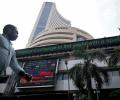
Among the Sensex firms, Bharat Electronics Ltd, Mahindra & Mahindra, Adani Ports, HCL Technologies, Eternal, Infosys, Bharti Airtel, Sun Pharmaceuticals, Larsen & Toubro, Hindustan Unilever and UltraTech Cement were the gainers. Bajaj Finance, Tata Motors Passenger Vehicles, Kotak Mahindra Bank, PowerGrid and Tata Steel were among the laggards.

Nayagam PP, career counsellor and founder of EduJobs360, explains how traditional engineering choices are being replaced with flexible, future-ready career paths that align with industry requirements.

FPIs net sold equities worth Rs 1.7 trillion in 2025 -- the highest annual net sale on record.

Wipro, India's fourth-largest IT services company, has secured an eight-year deal with Singapore-based Olam group, valued at over $1 billion, and will also acquire Olam's IT and digital services arm, Mindsprint, for $375 million, marking one of its largest contracts to date.

India contributes roughly 10 per cent of Samsung Electronics' global revenue and hosts over 10,000 engineers across its R&D centres.

India's third-largest telecom operator Vodafone Idea (Vi) has secured a 10-year breather on adjusted gross revenue (AGR) payments from the Department of Telecommunications (DoT). This is expected to ease pressure on its balance sheet and enable the company to raise bank debt for capital expenditure.

India Inc on Sunday hailed the Union Budget 2026-27 as a 'structural shift' in the country's technology landscape, noting that the government is moving beyond fragmented pilots to build foundational layers where AI serves as a 'horizontal enabler' for the entire economy.

The idea of back-loading the target of fiscal consolidation is perhaps guided by the government's desire to be prepared for any adverse developments in the coming year, points out A K Bhattacharya.

'Today, we are at a stage where we have launched a voice-to-voice model that supports 14 Indian languages.'

'The real story of 2025 is that India officially stopped being a 'market of the future' and started acting as the world's primary economic engine.'

FDI inflows into India are expected to register robust growth in 2026, supported by strong macroeconomic fundamentals, big-ticket investment announcements, sustained efforts to improve the ease of doing business, and a new generation of investment-linked trade pacts.
